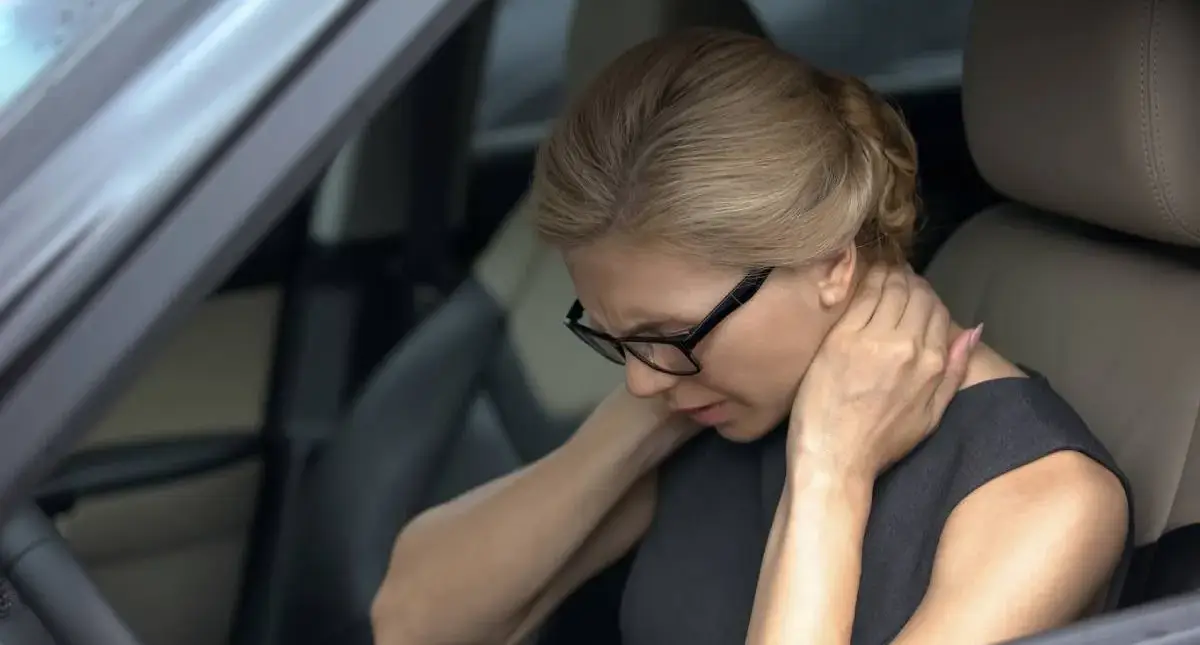





You can walk away from a car accident, exchange insurance information, and feel shaken but “okay”—then notice back or neck pain later that night, or a few days later when you try to sit through a meeting, turn to check your blind spot, or sleep without waking up stiff. That delayed pain can be frightening, especially if you’re worried it means you need surgery.
Most people do not need back surgery after a car accident. But some crash-related injuries can irritate or compress nerves, destabilize the spine, or create symptoms that do not improve with the right conservative care. The goal is to identify which situation you’re in and choose the safest next step based on your exam and imaging—not fear, and not a rushed recommendation.
Why Back Pain Can Start Days After a Crash
A collision can force your spine through sudden flexion, extension, twisting, or compression. Muscles tighten to protect you, ligaments can stretch, and spinal joints and discs can absorb more force than they were built to handle.
It’s also common for adrenaline, shock, and distraction to mask symptoms in the first hours. Inflammation and swelling can build over the next day or two, and pain may become more noticeable once you return to normal activities like driving, working at a computer, or lifting groceries.
People often hear the word “whiplash” after a crash. In medicine, whiplash typically refers to a soft-tissue injury in the neck, but similar strain patterns can occur in the mid-back or lower back. What matters is whether your symptoms suggest a deeper structural problem—especially one involving the nerves or spinal stability.
Common Spine Injuries After a Car Accident
Back pain after a crash can come from several structures at once. A careful history, neurologic exam, and appropriate imaging (often X-rays and/or MRI depending on symptoms) help narrow down the true pain generator.
Muscle Strain and Ligament Sprain
These are among the most common injuries after a collision. They often cause localized soreness, stiffness, and muscle spasm that worsens with movement or prolonged sitting. With a structured plan to restore motion and strength, many patients improve over several weeks.
Disc Injury (Bulge or Herniation)
Discs are cushions between the vertebrae. Trauma can aggravate a disc or contribute to a bulge or herniation. If disc material or disc-related inflammation irritates a nerve root, pain can travel into an arm or leg, sometimes with tingling or numbness.
Nerve Irritation or Compression
Nerves can be irritated by a disc, swelling, or pre-existing narrowing that becomes symptomatic after the accident. Symptoms may include burning pain, pins-and-needles, numbness, or weakness. These findings deserve prompt attention because persistent nerve compression can lead to lasting deficits in some cases.
Fracture or Spinal Instability
Higher-energy crashes can cause vertebral fractures or injuries to the ligaments that stabilize the spine. These conditions can be serious and may require urgent treatment to protect the spinal cord and nerves.
If you’d like a broader overview of diagnoses that can overlap with post-accident symptoms, review common spine conditions and how they’re typically evaluated.
Symptoms That Should Prompt a Spine Evaluation
Many aches after a crash improve with time, activity modification, and guided rehabilitation. However, certain symptoms can signal nerve involvement or a more significant injury and should be evaluated sooner rather than later.
- Pain that shoots into an arm or leg (radiating pain), especially if it’s new after the accident
- Numbness or tingling in the hand, fingers, foot, or toes
- Weakness such as foot drop, trouble climbing stairs, or reduced grip strength
- Worsening pain despite appropriate rest and conservative care
- Balance or coordination problems, clumsiness, or changes in walking
- Severe neck or back pain after significant trauma
- Changes in bowel or bladder control (seek urgent evaluation)
These symptoms do not automatically mean you need surgery. They mean you deserve a careful workup so a treatable nerve or stability problem is not missed.
What Treatment Usually Looks Like Before Surgery
When imaging and exam do not show an emergency, most treatment plans start conservatively. The focus is to control pain enough for you to move, restore healthy mechanics, and prevent the cycle of guarding, stiffness, and deconditioning that can prolong recovery.
Targeted Physical Therapy
Physical therapy is often the backbone of recovery. The right program addresses mobility, core and hip strength, posture, and safer movement strategies for daily life—getting out of a car, lifting, walking, and sitting at work.
Medication and Activity Modification
Depending on your situation and medical history, your physician may recommend anti-inflammatory medication or other pain-control strategies to improve sleep and function. The goal is to help you participate in rehab and normal activity safely—not to ignore ongoing neurologic symptoms.
Image-Guided Injections for Persistent Nerve Pain
When radiating pain suggests nerve-root inflammation, a targeted injection may help calm symptoms. Injections do not “repair” a torn disc or reverse arthritis, but they can reduce inflammation and create a window for therapy to work more effectively.
If symptoms persist or imaging shows a clear compressive problem, your surgeon may discuss options within minimally invasive spine surgery, which is designed to treat certain conditions with less disruption to surrounding tissue when appropriate.
When Back Surgery After a Car Accident May Be Recommended
Surgery is generally considered when there is a clear structural problem that matches your symptoms and exam findings, and when nonsurgical treatment has not provided meaningful improvement—or when the spine is not safe without stabilization.
Back surgery after a car accident may be recommended when:
- There is progressive neurologic deficit, such as worsening weakness, increasing numbness, or loss of function
- Severe nerve compression is causing persistent radiating pain or weakness despite appropriate conservative care
- A fracture or instability makes the spine unsafe without surgical stabilization
- Daily life is significantly limited (walking, working, driving, or sleeping) and the cause is surgically addressable
The procedure depends on the diagnosis. Some surgeries focus on relieving pressure on a nerve (decompression). Others focus on stabilizing an injured segment. A thoughtful surgical plan should be explained in plain language, including what it can reasonably help, what it cannot, and the key risks and recovery milestones.
You can learn more about the range of procedures on the practice’s spine surgery page.
How a Specialist Decides What Your Imaging Really Means
After a crash, imaging reports can list multiple findings—some related to the accident, some pre-existing, and some incidental. The most useful evaluation connects three things:
- Your symptoms (where the pain goes, what triggers it, what relieves it)
- Your neurologic exam (strength, sensation, reflexes, gait, and coordination)
- Your imaging (X-ray, CT, and/or MRI) to confirm the pain generator and rule out instability
This approach helps avoid two common problems: treating an MRI finding that is not actually causing symptoms, or overlooking a compressive issue that explains why you’re not improving.
Finding the Best Minimally Invasive Spine Surgeon in Los Angeles for Post-Accident Back Pain
If you’re still dealing with back or neck pain after a car accident, you deserve a plan that is based on a precise diagnosis and a clear explanation of your options. At Yashar Neurosurgery in Los Angeles, Parham Yashar, MD evaluates crash-related spine symptoms with a conservative-first mindset when appropriate, and discusses surgical solutions when the benefits reasonably outweigh the risks.
If you’re searching for the best minimally invasive spine surgeon in Los Angeles to evaluate back pain after a car accident, contact Yashar Neurosurgery to review your symptoms and imaging and to discuss a practical path forward.