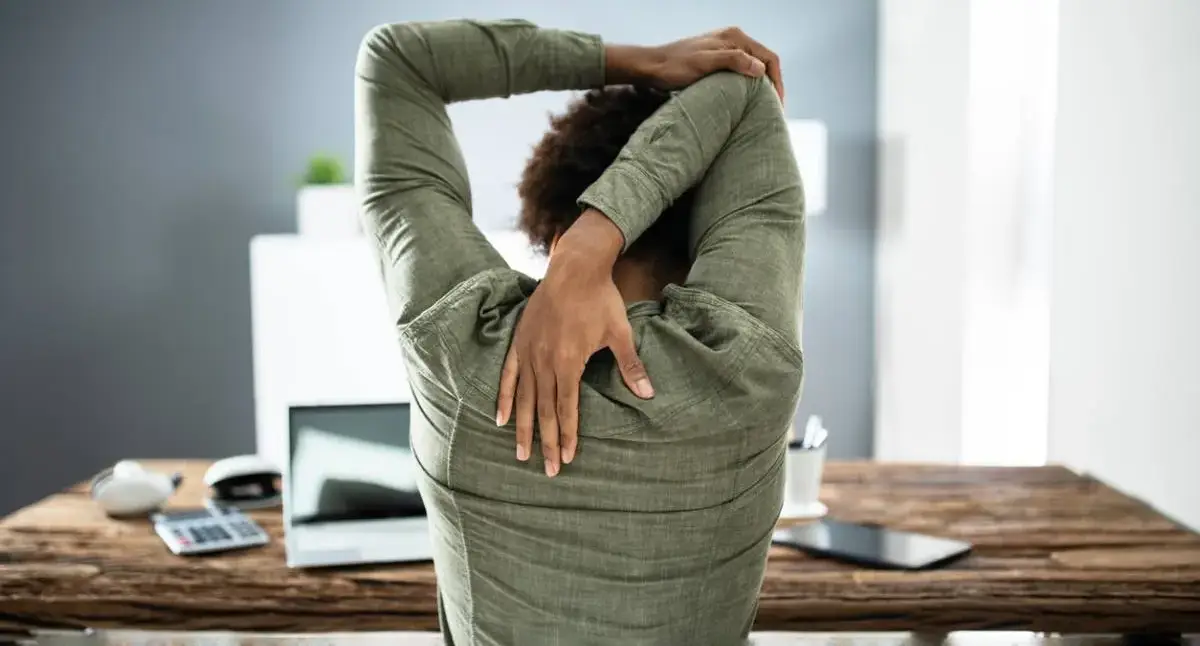





You sit down to start the day and everything feels manageable—until your third video call, when your lower back starts to ache, your hips feel tight, and standing up takes a moment to “unfold.” If that sounds familiar, you are not alone. Many people try to strengthen their lower back for a desk job because sitting for long stretches changes how the spine is supported, even if you are otherwise healthy and active.
The most helpful approach is not just “doing a few back exercises.” It is a combination of (one) reducing the daily strain that builds up at your workstation and (two) strengthening the muscles that take pressure off the low back—especially the glutes, hips, and core. Below is a practical, patient-friendly guide to why desk work triggers pain, what symptoms to take seriously, and what you can do at home.
Why Sitting Can Aggravate the Lower Back
Your spine is built to move. When you sit for long periods, the hips stay flexed, the pelvis often rolls backward, and the lower back tends to round. In that position, certain muscles become less active (commonly the glutes), while others work overtime (often the small muscles along the low back). Over time, that imbalance can lead to stiffness, aching, and flare-ups with simple activities like driving, standing at the sink, or walking after a meeting.
Sitting can also increase stress on the discs between the vertebrae for some people, particularly when posture collapses or when you are leaning forward for hours to type or look at a laptop. That does not automatically mean you have a disc problem—but it helps explain why “it only hurts when I sit” can still be a real, physical issue.
Common Desk-Related Causes of Low Back Pain
Most desk-related back pain is the result of repeat stress, not a single dramatic injury. Common contributors include:
- Prolonged sitting with slumped posture (rounded low back, forward head, shoulders creeping up)
- Infrequent movement, which increases stiffness and reduces circulation to muscles and joints
- Weak or under-recruited glutes and core, causing the low back to “brace” all day
- Tight hip flexors, which can change pelvic position and increase low back strain
- Poor workstation setup, such as a monitor that is too low or a chair that does not support your pelvis
If your pain began after a fall, a sudden lift, or a twisting injury—or if symptoms are building despite good habits—it may be worth reviewing common diagnoses on our spine conditions page so you know what to ask about during an evaluation.
Symptoms That Deserve More Than Home Exercises
Many people feel stiffness at the end of the day that improves with walking or light movement. That pattern often responds well to strengthening and better daily habits. However, some symptoms suggest irritation of a nerve or another condition that needs a more specific plan.
Consider seeking prompt evaluation if you have:
- Pain that travels into the buttock, thigh, calf, or foot
- Numbness or tingling in the leg or foot
- New or worsening weakness (tripping, foot drop, difficulty rising from a chair)
- Balance changes or unsteadiness
- Changes in bladder or bowel control
- Pain that is escalating quickly or feels out of proportion to your activity
These issues do not automatically mean you need surgery, but they do mean it is smart to get a clear diagnosis rather than pushing through exercises that could worsen symptoms.
Simple Desk Habits That Reduce Strain Today
Strengthening helps, but your back also needs fewer hours of “micro-stress” at work. Small changes tend to add up when you do them daily.
Set up Your Workstation to Support Your Pelvis
Aim for a position where your ribcage is stacked over your pelvis instead of drifting forward. Many people get relief when they:
- Keep both feet flat on the floor (or use a footrest if your chair is high)
- Sit back so the chair supports the pelvis and low back (a small lumbar roll can help)
- Bring the keyboard and mouse close enough that you are not reaching all day
- Raise the monitor so you are not looking down for long stretches
Use Movement Breaks as Prevention, Not a Rescue
Waiting until your back hurts usually means stiffness is already set in. Try “micro-breaks” instead: stand up for one to two minutes every 30 to 60 minutes, take a short lap, do a gentle hip stretch, or alternate between sitting and standing if you have that option. The goal is frequent resets, not an intense stretch session once pain starts.
Exercises to Strengthen Your Lower Back for a Desk Job
When patients say they want to strengthen the lower back, they often need stronger support around it—especially from the glutes, hips, and core—so the low back is not doing all the stabilizing by itself.
These exercises are commonly recommended because they are simple, require little equipment, and build the support system that helps your spine tolerate sitting and standing.
Safety note: Stop any exercise that causes sharp pain, pain shooting down the leg, numbness/tingling, or a clear worsening of symptoms later that day or the next morning.
Bridges
Bridges are a reliable way to wake up the glutes and reduce over-reliance on the low back.
- Lie on your back with knees bent and feet flat, about hip- to shoulder-width apart.
- Gently brace your core (think: tighten around your midsection without holding your breath).
- Press through your heels and lift your hips until your body forms a straight line from shoulders to knees.
- Squeeze your glutes at the top; avoid over-arching your lower back.
- Lower slowly with control.
- Work up to 15 reps per set and up to three sets.
Lateral Leg Lifts
Lateral leg lifts strengthen the side hip (glute medius), which helps keep the pelvis stable and can reduce strain on the low back when you stand and walk.
- Lie on your side with your head supported by your arm.
- Keep your body in a straight line and your hips stacked.
- Lift the top leg 45 to 90 degrees, keeping it straight and aligned with your body.
- Lower gently and repeat.
- Aim for 15 reps per side per set.
- If you add a band or ankle weight, increase gradually and stop if symptoms flare.
Supermans (with Control)
Supermans can strengthen muscles along the back of the body, but they should feel controlled—not like you are “cranking” your low back.
- Lie face down with arms extended in front of you.
- Lift your chest and legs slightly off the ground at the same time, creating a shallow curve.
- Hold briefly, then lower down with control.
- Repeat for a comfortable number of reps while maintaining good form.
If this movement increases back pain or triggers leg symptoms, skip it and consider a guided plan. Some people—especially those with disc-related irritation—do better with alternatives chosen after an exam.
If Pain Keeps Returning: Treatment Options Beyond Exercise
If you have improved your workstation habits and have been consistent with strengthening, but pain still limits sitting, driving, walking, or sleep, it is time to look deeper. Persistent symptoms may be related to disc wear, arthritis, inflammation around joints, a herniated disc, or narrowing that reduces space for nerves.
Treatment often starts conservatively and may include physical therapy tailored to your movement pattern, anti-inflammatory strategies when appropriate, or targeted injections to calm inflammation and help you participate more fully in rehab. When symptoms are caused by nerve compression, certain spinal decompression procedures may be considered to relieve pressure on the affected nerve structures.
If a procedure is recommended, patients often ask about options that minimize disruption to the surrounding muscles. For the right candidates, minimally invasive spine surgery techniques may help reduce tissue trauma and support a faster return to normal activity compared to traditional open approaches.
When to See a Spine Specialist
Consider a specialist evaluation if:
- Your pain lasts more than a few weeks despite consistent home care
- You are avoiding activities, missing work, or changing how you walk or move to protect your back
- Sitting tolerance continues to shrink (for example, you cannot get through a commute or meeting)
- You have leg pain, numbness/tingling, weakness, or symptoms that are worsening
A focused exam can help separate muscular strain and posture-related pain from conditions that need targeted treatment. If you are reviewing procedural possibilities after conservative care, our spine surgery overview can help you understand how different options fit into a step-by-step plan.
Lower Back Pain Help in Los Angeles at Yashar Neurosurgery
Desk-job back pain is common, but living with daily stiffness or recurring flare-ups does not have to be your new normal. At Yashar Neurosurgery, Parham Yashar, MD, helps patients pinpoint what is actually driving their symptoms and build a plan that matches their goals—from exercise-based care and non-surgical options to minimally invasive procedures when appropriate.
If you are trying to strengthen your lower back for a desk job but pain keeps returning or starts traveling into the leg, schedule an evaluation with a spine specialist in Los Angeles at Yashar Neurosurgery to get clear answers and a path forward.