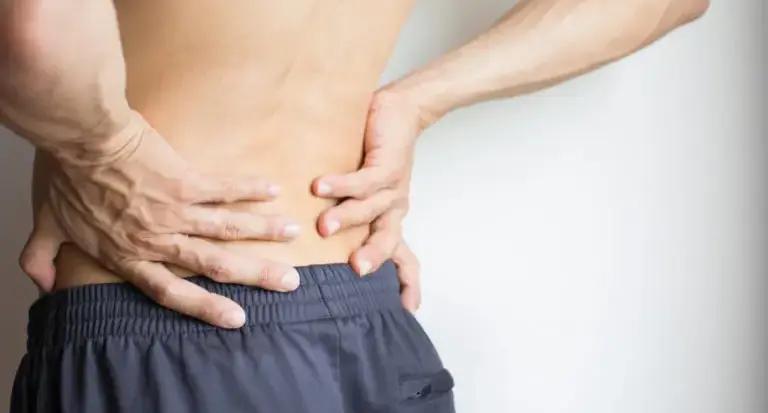





You twist to reach something in the back seat, stretch after sitting at your desk, or roll out of bed—and your back makes a loud pop. Sometimes it feels like a release. Other times the sound is followed by a sharp pinch, soreness, or a new ache that makes you worry you did damage.
Most of the time, a back crack is harmless. But if you feel like you need to crack your back throughout the day just to feel “normal,” or if cracking is paired with pain, tingling, or symptoms traveling into an arm or leg, it may be your spine’s way of telling you something else is going on. This guide explains what the “pop” usually means, what warning signs to take seriously, and when it makes sense to talk with a specialist about issues like a pinched nerve or herniated disc treatment.
What Actually Makes the “Crack” Sound?
The most common source of a back “crack” is a normal joint sound. Along the back of the spine are small joints called facet joints that help guide motion (bending, twisting, and extending). When you stretch or rotate, the pressure inside one of these joints can change quickly, and dissolved gas in the joint fluid can form and release a bubble. That rapid pressure shift can create the popping sound.
Not every pop is gas release, though. A crack can also come from:
- Tendons or ligaments shifting over bone as you move
- Stiff joints suddenly moving after being held still for a long time (like after a drive or long workday)
- Muscle tightness letting go with a stretch
Importantly, a crack does not automatically mean something “went back into place,” and it does not confirm that the spine is aligned or healed.
Why Cracking Can Feel Good, Even If Nothing Is Fixed
People crack their backs for a reason: it can feel like pressure drops instantly. That short-term relief is often a mix of joint pressure changes and a momentary reduction in stiffness, especially if you have tight hip flexors, hamstrings, or low-back muscles from prolonged sitting.
But the sensation of relief can be misleading. If the tightness is being driven by something underneath—like disc irritation, arthritis in the facet joints, muscle imbalance, or nerve inflammation—cracking may calm the sensation temporarily without changing the cause. That is when a “satisfying pop” can turn into a pattern: you crack, feel better briefly, then need to crack again later.
Think of back cracking as a signal, not a solution. If it’s occasional and painless, it’s usually not concerning. If it becomes frequent or necessary to get through the day, it’s worth stepping back and asking why your spine keeps feeling stuck.
When Cracking Your Back Is a Red Flag
The sound itself is rarely the problem. The concern is cracking paired with pain or neurologic symptoms—especially after a new injury or if symptoms are progressing.
Consider scheduling an evaluation if you notice:
- Pain that persists more than a few days or keeps recurring
- Sharp pain with twisting, bending, coughing, or sneezing
- Numbness or tingling in the buttock, leg, foot, arm, or hand
- Weakness (tripping, foot drop, trouble gripping)
- Pain traveling down the leg consistent with sciatica treatment being worth discussing
- Symptoms after a fall, car accident, or sports injury
- Balance changes or clumsiness that is new for you
If you develop new loss of bowel or bladder control, numbness in the groin/saddle area, rapidly worsening weakness, or severe pain after significant trauma, seek urgent medical care. Those patterns can indicate a more serious problem that should not wait.
Can Cracking Your Back Cause a Herniated Disc?
Gentle stretching or occasional self-cracking is unlikely to directly cause a herniated disc in an otherwise healthy spine. Disc herniations more commonly develop from wear-and-tear over time, repetitive strain, or a specific event like lifting and twisting—especially if the disc is already degenerating.
That said, forceful twisting, aggressive self-manipulation, or repeatedly pushing through pain can aggravate an existing issue. It can also be that you crack your back around the same time a disc becomes irritated, and the timing makes it feel like the pop “caused” the problem. In real life, symptoms often overlap.
If your back pain is accompanied by radiating leg pain, numbness, or weakness, disc-related conditions such as a protrusion or extrusion may be part of the discussion. These pages break down how they are evaluated and treated: disc protrusion treatment and disc extrusion treatment.
How to Relieve Back Pressure without over-Cracking
If you crack your back because it feels stiff, the best long-term plan is usually aimed at reducing the daily triggers for that stiffness. Many patients improve with a combination of movement habits and targeted rehab rather than repeated twisting until something pops.
Depending on your symptoms and diagnosis, helpful non-surgical strategies may include:
- Ergonomics and posture adjustments (especially if symptoms flare with sitting or driving)
- Guided physical therapy to improve hip and thoracic mobility and strengthen core support
- Activity modification during flare-ups, then a gradual return to normal movement
- Anti-inflammatory medication when appropriate, as advised by your clinician
If symptoms suggest nerve irritation, addressing the nerve source matters more than chasing joint pops. An evaluation can clarify whether your pain pattern fits a muscle strain, joint inflammation, disc irritation, or nerve compression.
When Procedure-Based Treatment May Enter the Conversation
Most back and neck pain improves without surgery. When procedure-based treatment is considered, it’s usually because symptoms persist despite conservative care, or because there is evidence of nerve compression that is affecting function—such as objective weakness—or pain that significantly limits walking, working, or sleep.
For certain disc-related problems, a procedure to relieve pressure on a nerve may be discussed. One common category is spinal discectomy surgery, which may be performed using minimally invasive techniques in appropriately selected patients.
If you’re trying to connect symptoms to a diagnosis, browsing the broader overview of spine conditions can also help you understand how providers differentiate disc pain, joint pain, stenosis, and other causes.
Finding the Best Pinched Nerve Surgeon in Los Angeles
Cracking your back once in a while is common and often benign. But when cracking becomes a daily habit to control discomfort—or when a crack is followed by radiating pain, tingling, numbness, or weakness—guesswork can keep you stuck in the same cycle.
At Yashar Neurosurgery in Los Angeles, Parham Yashar, MD evaluates back and neck symptoms with an emphasis on clear diagnosis and a stepwise plan, starting with non-surgical options when appropriate and moving to minimally invasive procedures when they truly match the problem. If you’re concerned about a painful back crack or ongoing symptoms that may relate to a pinched nerve, call (424) 209-2669 or request a consultation at 8436 W. 3rd Street, Suite 800, Los Angeles, CA 90048.