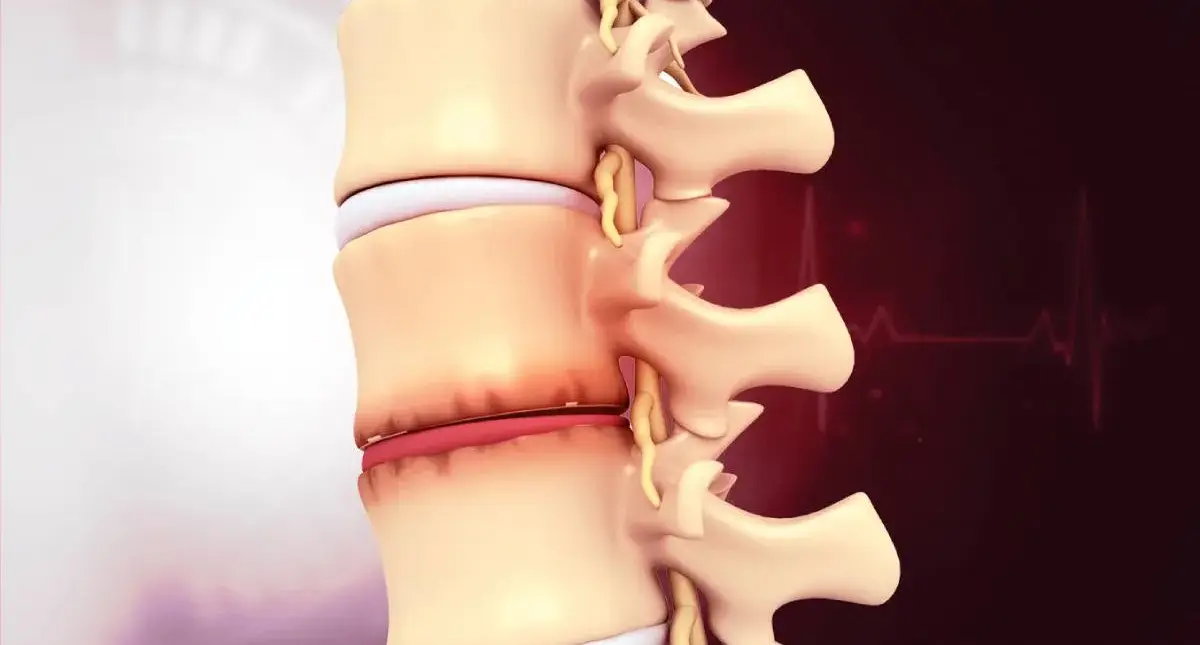





Back or neck pain is easy to ignore at first—until it starts shaping your routine. You might dread the first few steps after getting out of bed, brace yourself before a long drive, or avoid lifting, workouts, and travel because you’re worried your symptoms will flare. When pain is coming from a worn-out or injured spinal disc and it has not improved with conservative care, disc replacement may be worth a focused conversation with a spine specialist.
This guide explains when disc replacement is typically considered, who may (and may not) be a good candidate, and what to expect before and after surgery—so you can make a clear, confident decision with your surgeon.
What Disc Replacement Is (and How It Differs from Fusion)
Your spine is built from vertebrae stacked like blocks, with a disc between each pair. Discs act like shock absorbers and allow controlled motion. When a disc degenerates or is damaged, it can become painful itself or contribute to inflammation and mechanical instability, leading to persistent neck or low back pain.
Disc replacement surgery removes the painful disc and replaces it with an artificial disc designed to preserve motion at that spinal level. This is one reason people often compare it to joint replacement in other parts of the body.
Disc replacement is different from fusion, which permanently joins two vertebrae together to stop motion at a painful segment. Fusion can be the right choice in some situations, but disc replacement is designed with motion preservation in mind—when the anatomy and diagnosis support it.
Signs Your Pain May Be Coming from a Damaged Disc
Not all back or neck pain is “disc pain,” and imaging findings alone do not automatically mean you need surgery. Many people have disc degeneration on MRI without symptoms. The more helpful question is whether your symptoms, exam, and imaging point to one or two discs as the main pain generator.
Common patterns that raise suspicion for disc-related pain include:
- Persistent low back or neck pain that continues despite rest and activity changes
- Pain that worsens with sitting, bending, lifting, or twisting (mechanical pain patterns)
- Episodes that keep returning and increasingly interfere with work, exercise, or sleep
- Leg or arm symptoms (pain, numbness, tingling) when a disc problem is also irritating a nerve, such as with a herniated disc
If you have symptoms like progressive weakness, major balance problems, or new bowel or bladder control issues, treat it as urgent and seek immediate medical evaluation.
When Disc Replacement Is Commonly Considered
Disc replacement is not a first-line treatment. It is generally considered when your daily function is limited, the likely source of pain is well-identified, and non-surgical care has not provided durable relief.
You Have Degenerative Disc Disease at One or Two Levels
Degeneration happens as discs gradually lose hydration and height over time. That process is often called degenerative disc disease. In some people, degeneration becomes painful and function-limiting—especially when one or two discs are the main problem. Disc replacement is typically aimed at these focused, level-specific situations rather than widespread multi-level arthritis.
Non-Surgical Treatment Has Been Tried and Has Not Helped Enough
Most patients will attempt several conservative options before surgery is considered. This may include activity modification, targeted physical therapy, anti-inflammatory medications when appropriate, and image-guided injections. Disc replacement tends to enter the conversation when these steps have not restored function and pain continues to dictate choices—how long you can sit, whether you can exercise, or how well you can sleep.
Your Pain Is Affecting Posture, Movement, and Quality of Life
Disc pain can create a “protective” way of moving—avoiding extension, walking with stiffness, or limiting trunk rotation. Over time, that can reduce conditioning and increase sensitivity to activity. When pain is leading to deconditioning, avoidance, and a shrinking day-to-day life, it may be reasonable to evaluate whether a structural problem (like a severely degenerated disc) is keeping you stuck.
Motion Preservation Is a Priority and Your Anatomy Supports It
Disc replacement is designed to keep the spine moving at the treated level. That goal is not appropriate in every spine, and it depends on factors like alignment and the health of the facet joints (the small joints in the back of the spine that also guide motion). A surgeon will assess whether motion preservation is likely to help—or whether a different approach better matches your anatomy and diagnosis.
Who May Not Be a Good Candidate for Disc Replacement
Disc replacement works best for a specific group of patients. It may not be recommended when other issues are the primary driver of symptoms or when an artificial disc would not perform predictably. Examples that commonly make disc replacement less suitable include:
- Significant facet joint arthritis or other major joint disease at the painful level
- Marked spinal instability (for example, excessive slip between vertebrae)
- Substantial spinal deformity such as significant scoliosis
- Widespread multi-level degeneration where pain is not coming from just one or two discs
- Prior spine surgery at the same level in some cases (your surgeon will review this carefully)
Final candidacy requires an in-person evaluation. Your symptoms, neurological exam, imaging, and response to prior treatments all matter.
What to Expect from Disc Replacement Surgery and Recovery
If you are a candidate and choose surgery, your team will walk you through pre-op planning, imaging review, and medical clearance. Disc replacement is commonly performed through an approach that allows access to the disc without working directly around the spinal nerves from the back. The specific approach depends on whether the target is in the neck or low back, your anatomy, and the surgeon’s plan.
In general, patients often want to know three things: how long they’ll be in the hospital, how quickly they can move, and when they can get back to normal life. Many people begin walking soon after surgery, then gradually increase activity as pain improves and strength returns. Physical therapy may be recommended to rebuild core strength, restore controlled mobility, and support a safe return to work and exercise.
As with any procedure, risks exist and vary based on the level treated and your health history. Your surgeon should review the most relevant risks for you—including infection, bleeding, nerve injury, implant-related issues, and the possibility that symptoms may not fully resolve—before you decide.
Disc replacement is often performed using techniques aligned with minimally invasive spine surgery principles when appropriate, with the goal of reducing tissue disruption and supporting a smoother recovery. Not every case can be minimally invasive, and your plan should be individualized.
When to See a Spine Specialist for an Evaluation
If you have ongoing neck or low back pain that has lasted for months, keeps recurring, or is steadily limiting walking, sitting, driving, or sleep, it is reasonable to get a specialist evaluation—especially if you’ve already tried structured conservative care. A spine consultation should clarify:
- Whether your symptoms match the imaging findings
- Whether one or two discs are truly the main pain source
- Which options make sense before surgery
- If surgery is appropriate, whether disc replacement or another procedure better fits your diagnosis
You do not need to arrive with a “procedure in mind.” A good evaluation focuses on the root cause and the safest path back to function.
Disc Replacement in Los Angeles at Yashar Neurosurgery
Choosing spine surgery is a big decision because it affects how you move every day. At Yashar Neurosurgery in Los Angeles, Parham Yashar, MD focuses on careful diagnosis, clear education, and matching the procedure to the person—especially when motion preservation is the goal. If you’re looking for the best disc replacement surgeon in Los Angeles, the next step is a comprehensive evaluation to confirm whether disc replacement is truly the right option for your spine and your symptoms.
To schedule a consultation at Yashar Neurosurgery, call (424) 209-2669 or visit our office at 8436 W. 3rd Street, Suite 800, Los Angeles, CA 90048.