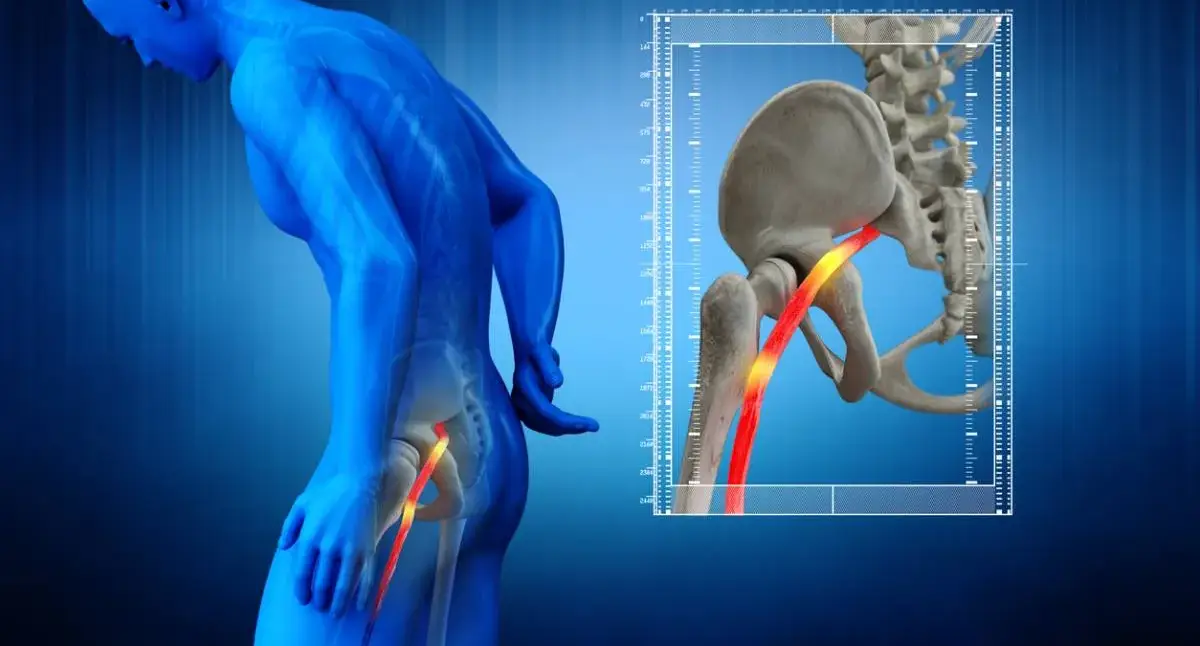





You stand up after a long drive, step out of bed, or bend to pick something up—and a sharp, electric pain shoots from your low back into your buttock and down your leg. That pattern is one of the most common early warning signs of sciatica. It can start as an occasional “zing,” but for some people it quickly becomes the reason they stop walking as far, avoid stairs, or wake up at night trying to find a position that doesn’t hurt.
Sciatica is not a disease by itself. It’s a symptom pattern that usually points to irritation or compression of a nerve root in the lower spine (lumbar spine) that contributes to the sciatic nerve. Recognizing when back pain has become nerve pain can help you get the right evaluation sooner—especially if you notice numbness, weakness, or symptoms that keep worsening.
What Sciatica Is (and What It Is Not)
The sciatic nerve is the largest nerve in the body. It is formed by several nerve roots that exit the lower spine and then travel through the pelvis and buttock into the back of the thigh, and often into the calf, ankle, or foot. When one of those nerve roots is inflamed or compressed, it can create pain, tingling, or numbness that follows the nerve’s route.
This is why sciatica often feels like pain that “travels” down the leg rather than staying in one spot in the back. Many people also notice that certain positions change the symptoms—sitting may make it worse, or standing and walking may bring it on—depending on what is pressing on the nerve.
Sciatica is sometimes used as a catch-all term for any leg pain, but not all leg pain is sciatica. Hip problems, muscle strain, vascular issues, and peripheral nerve conditions can mimic it. A focused exam is often what separates true nerve-root sciatica from other causes.
Early Warning Signs and Common Symptoms
Sciatica symptoms can be mild at first and flare only with certain activities—lifting, bending, prolonged sitting, or getting up from a chair. Over time, the episodes may last longer or become easier to trigger.
Common early warning signs of sciatica include:
- Radiating pain from the low back into the buttock and down the thigh, calf, or foot (often on one side)
- Tingling or “pins and needles” in the leg, toes, or foot
- Numbness in a specific strip or patch of the leg or foot
- Weakness in the leg or foot (for example, trouble lifting the foot, climbing stairs, or pushing off to walk)
- Pain that worsens with certain movements such as bending, twisting, coughing, or prolonged sitting
- Reduced tolerance for standing or walking, sometimes improving when sitting or leaning forward (a pattern that can occur with spinal narrowing)
People describe sciatica pain differently—burning, stabbing, deep aching, or an electric shock sensation. The most important clue is the distribution: symptoms that follow a nerve pathway down the leg.
Symptoms That Need Urgent Evaluation
Most sciatica is not an emergency, but certain neurologic symptoms should be evaluated urgently because they can signal serious nerve compression:
- New loss of bowel or bladder control
- Numbness in the groin or “saddle” area
- Rapidly worsening leg weakness
These findings can be associated with rare conditions such as cauda equina syndrome. If they occur, seek emergency care right away.
What Causes Sciatica?
Sciatica happens when a lumbar nerve root becomes irritated or compressed. The underlying cause matters because it changes what treatment is most likely to help.
Common causes include:
- Herniated disc: Disc material can bulge or leak out and press on a nearby nerve root. Many patients with classic shooting leg pain have a disc problem, which may overlap with herniated disc treatment discussions.
- Spinal stenosis: Narrowing of the spaces where nerves travel can squeeze nerve roots, often felt during standing or walking. Learn more about spinal stenosis and why symptoms can change with posture.
- Degenerative disc disease: As discs lose height and hydration over time, the mechanics of the spine change and can contribute to nerve irritation. See degenerative disc disease treatment for related background.
- Arthritis changes and bone spurs: Arthritic wear can lead to bony overgrowth that crowds nerve space. This is sometimes part of the larger picture of osteoarthritis treatment.
- Spondylolisthesis: When one vertebra slips forward relative to another, it can narrow the nerve exit pathway and trigger leg symptoms.
- Piriformis syndrome: A tight muscle in the buttock region can irritate the sciatic nerve outside the spine and mimic lumbar sciatica.
- Less common causes: Infections, fractures, or tumors can also create sciatica-like symptoms by affecting the spine or nearby structures. These are not typical, but they are reasons persistent or unusual symptoms deserve evaluation.
Because multiple conditions can produce similar leg symptoms, getting clarity on the source of nerve irritation is often the turning point between “chasing pain” and following an effective plan.
Risk Factors That Can Make Sciatica More Likely
Many people develop sciatica without a single clear trigger. Still, certain factors increase the odds of nerve irritation or make episodes more persistent:
- Age-related changes: Arthritis, disc degeneration, and thickened ligaments can reduce space around nerve roots.
- Repetitive bending, lifting, or twisting: Work or activities that load the lumbar spine can contribute to disc problems and flare-ups.
- Smoking: Smoking is associated with disc changes and has been linked to lumbar radicular pain.
- Diabetes: Diabetes can cause peripheral neuropathy that may mimic or overlap with sciatica symptoms, sometimes complicating the picture.
- Excess body weight: Added load can increase strain on the lower back and may prolong recovery for some patients.
- Stress and poor sleep: These don’t “cause” sciatica, but they can amplify pain sensitivity and make symptoms feel harder to manage.
Risk factors help explain why symptoms may have started, but they also highlight practical places to intervene—movement habits, conditioning, smoking cessation, and targeted rehab—alongside medical care.
How Sciatica Is Diagnosed
A good evaluation starts with the story: where the pain goes, what triggers it, what relieves it, and whether you have numbness or weakness. During the physical exam, a spine specialist will typically assess:
- Leg strength (including foot and ankle muscles)
- Sensation changes (numbness patterns can match specific nerve roots)
- Reflexes
- Movement tests that reproduce or reduce symptoms
Imaging is not always needed right away, especially if symptoms are improving. However, MRI or other tests may be recommended when pain is severe, symptoms persist, there is weakness, or when planning injections or a procedure. In some cases, an EMG can help evaluate nerve function when the diagnosis is unclear.
Treatment Options for Sciatica
Many cases of sciatica improve with non-surgical treatment aimed at reducing inflammation, improving mechanics, and helping the nerve calm down. The right plan depends on what is causing the symptoms and how much the nerve is being affected.
Common options include:
- Medication: Anti-inflammatory medicines and other prescriptions may be used to reduce pain and irritation.
- Physical therapy: Targeted exercises can improve mobility, reduce nerve tension, and rebuild core and hip strength that supports the lower back.
- Epidural steroid injections: Injections may decrease inflammation around the nerve root and provide enough relief to participate in rehab and daily activities more comfortably.
- Minimally invasive procedures: When imaging confirms ongoing mechanical compression, surgery may be considered to relieve pressure on the nerve. Depending on the cause, this can include procedures under the broader category of spinal decompression or removal of disc material via spinal discectomy surgery.
If you’d like a condition-focused overview of care pathways, visit our page on sciatica treatment, including how treatment is tailored to symptom severity and the underlying cause.
When to See a Spine Specialist
It’s time to consider a specialist evaluation when sciatica is no longer just an occasional inconvenience—when it’s changing how you walk, sit, sleep, or work. Many patients come in after realizing they are limiting errands, avoiding exercise, or planning their day around when the leg will flare.
Consider seeing a spine specialist if:
- Your radiating leg pain, tingling, or numbness lasts more than two weeks or keeps recurring
- You notice weakness in the leg or foot
- Symptoms are getting worse, spreading, or becoming more frequent
- Home care is not helping you return to normal activity
- You have imaging results but they don’t match your symptoms and you want a clearer explanation
Even when surgery is not needed, a precise diagnosis can prevent months of trial-and-error and help you protect function while you heal.
Sciatica Treatment in Los Angeles at Yashar Neurosurgery
Radiating leg pain can look straightforward on paper, but in real life it can come from a disc problem, spinal narrowing, arthritis changes, or irritation outside the spine. That’s why sciatica care works best when the diagnosis is specific and the plan is built around how your symptoms behave day to day.
At Yashar Neurosurgery, Parham Yashar, MD takes time to evaluate the cause of sciatica and discuss the full range of options—from nonsurgical care to minimally invasive procedures when appropriate. If you’re looking for a sciatica evaluation in Los Angeles, or you want a careful opinion on whether your symptoms suggest a pinched nerve, disc issue, or stenosis, call (424) 209-2669 or request a consultation at Yashar Neurosurgery in Los Angeles.