




If you woke up with stubborn morning stiffness, aching in your neck or lower back, or a new fear of “throwing your back out,” it’s easy to wonder what’s going on—especially when you hear two similar-sounding terms: osteoarthritis and osteoporosis. They are not the same condition, they affect different tissues, and they lead to different next steps in diagnosis and treatment.
This guide walks you through the real difference between osteoarthritis vs. osteoporosis, how each one can affect the spine, and when it’s worth getting evaluated—particularly if symptoms are changing the way you walk, sleep, drive, work, or feel about everyday movement.
What Osteoarthritis Is (and What It Does to Joints)
Osteoarthritis is the most common type of arthritis. It develops when the smooth cartilage that helps a joint glide begins to wear down over time. As that cushioning surface thins, the joint can become irritated and inflamed, and movement may feel stiff, sore, or “crunchy.”
Osteoarthritis can affect many areas of the body, but spine-related arthritis often involves the facet joints—small joints in the back of the spine that guide motion. When those joints become arthritic, you may notice pain with bending, twisting, prolonged sitting, or standing up after sitting.
Common areas affected by osteoarthritis include:
- Knees
- Hips
- Hands
- Neck
- Lower back
For a spine-focused overview of diagnosis and care, visit our page on osteoarthritis treatment.
How Osteoarthritis Can Progress in the Spine
In the spine, osteoarthritis can be part of a broader “degenerative” pattern—where discs lose height, joints become inflamed, and the body may form extra bone as it tries to stabilize the area. That extra bone growth can contribute to bone spurs, which sometimes narrow the space around nerves. If that narrowing becomes significant, it may contribute to spinal stenosis and symptoms like leg heaviness, tingling, or pain with walking.
What Osteoporosis Is (and Why Fracture Risk Matters)
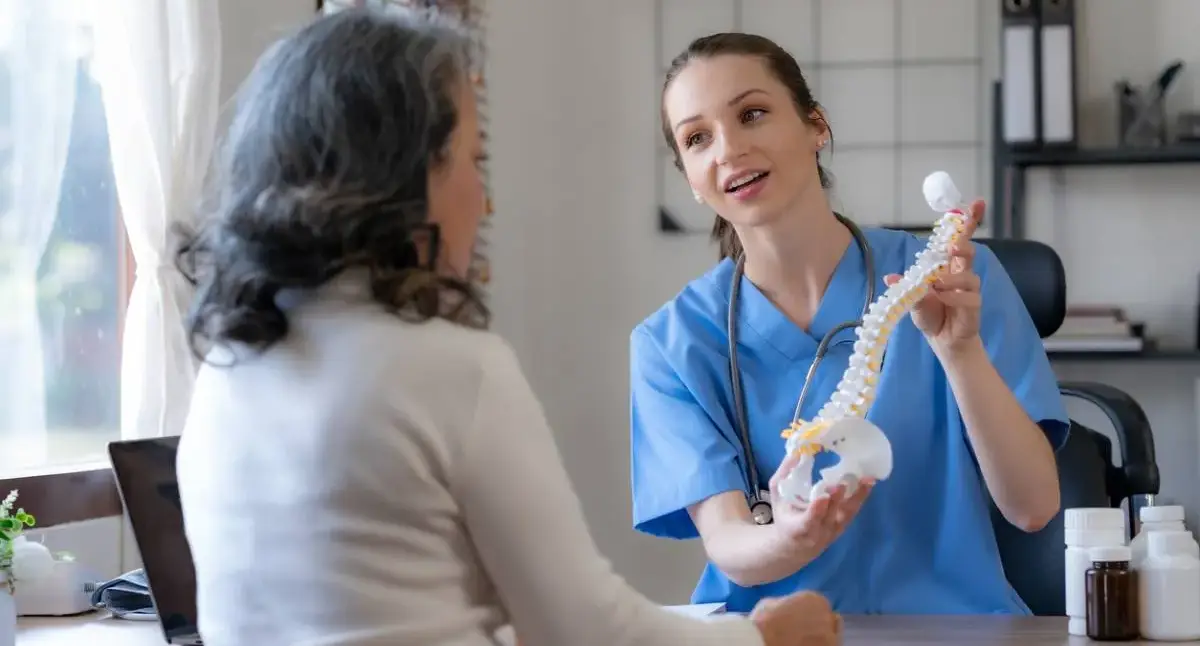
Osteoporosis is a condition of bone strength. Instead of affecting cartilage and joints, it reduces bone density and bone structure over time, making bones more fragile. In early stages, osteoporosis often causes no symptoms at all. For many people, the first sign is a fracture after a low-impact fall—or even after a seemingly minor strain.
In the spine, osteoporosis can lead to vertebral compression fractures. These may cause sudden mid-back or low-back pain, pain that worsens with standing or walking, and sometimes visible height loss or a more rounded posture.
If a compression fracture is a concern, see our resource on compression fracture treatment.
Risk Factors Associated with Osteoporosis
Several factors are linked with a higher risk of osteoporosis, including:
- Family history
- Vitamin deficiencies
- Sedentary lifestyle
- Excessive alcohol use
- Tobacco use
- Some complex medical conditions
- Estrogen deficiency
Osteoporosis tends to affect women more than men, and post-menopausal women can be especially vulnerable due to hormonal changes that influence bone density.
Osteoarthritis vs. Osteoporosis: the Clear, Simple Difference
The simplest way to remember the difference is this: osteoarthritis affects joints (especially cartilage), while osteoporosis affects bones (especially strength and density).
They also tend to show up differently:
- Osteoarthritis more often causes pain with motion, stiffness after rest, and reduced range of motion in a specific joint or region of the spine.
- Osteoporosis is often “silent” until a fracture occurs, or it may cause sudden pain after a minor fall, twist, or lift—particularly in the spine, hip, or wrist.
It’s also possible to have both conditions at the same time. For example, someone can have arthritis-related back pain and also have low bone density that increases the risk of fracture. That overlap is a major reason to avoid self-diagnosis: treatments and precautions are not interchangeable.
How These Conditions Can Affect Daily Life (and What Symptoms Can Overlap)
From a patient’s perspective, osteoarthritis and osteoporosis can both “feel like back pain,” but the underlying problem—and what you should do next—may be very different.
With osteoarthritis in the spine, pain may build gradually. You might notice stiffness when getting out of bed, soreness after long drives, or pain that flares after yard work or lifting. Symptoms can vary day to day, and some people find certain positions or gentle movement helpful.
With osteoporosis, the bigger issue is fragility. A compression fracture can cause abrupt pain that feels out of proportion to the activity that triggered it. People sometimes describe it as a sharp, deep ache that makes it hard to stand upright, walk comfortably, or take deep breaths.
Because the early experiences can overlap, a focused exam and the right imaging are often the most useful way to separate “joint degeneration” from “bone fragility,” especially when pain is persistent or escalating.
Treatment Options for Osteoarthritis and Osteoporosis
Both osteoarthritis and osteoporosis are chronic conditions, but the goal of treatment is different for each.
Osteoarthritis Treatment Goals
Osteoarthritis care typically focuses on reducing pain, improving mobility, and keeping you active. Depending on where arthritis is occurring and how severe symptoms are, treatment may include:
- Physical therapy and targeted exercise
- Medication to help with pain and inflammation when appropriate
- Supportive devices (such as bracing) in select situations
- Heat and cold therapy during flare-ups
- Complementary therapies to reduce muscle tension
- Procedural or surgical options when symptoms don’t improve and function is declining
If nerve compression becomes part of the problem, options may include image-guided injections or, when indicated, minimally invasive spine surgery to relieve pressure while aiming for less tissue disruption than traditional open approaches.
Osteoporosis Treatment Goals
Osteoporosis treatment is designed to slow bone loss, build bone when appropriate, and reduce fracture risk. Many patients are treated with medication, and a plan may also include strength training, fall-prevention strategies, and guidance on safer activity choices.
When osteoporosis leads to a painful vertebral compression fracture that doesn’t improve with conservative care, procedures such as kyphoplasty may be considered for select patients after a full evaluation.
When to See a Spine Specialist
If you’re trying to figure out whether your symptoms fit osteoarthritis, osteoporosis, or another spine issue, a specialist visit is often most helpful when symptoms are persistent, limiting, or concerning for nerve involvement or fracture.
Consider an evaluation if you have:
- Back or neck pain that lasts for weeks, keeps recurring, or is getting worse
- Pain that limits walking, standing, lifting, driving, or sleep
- Numbness, tingling, or weakness in an arm or leg
- Sudden back pain after a minor fall, cough, twist, or lift
- Noticeable height loss or a change in posture
- Known low bone density plus new or unexplained spine pain
A clear diagnosis helps avoid mismatched treatment—for example, pushing through a fracture-related pain episode as if it were “just arthritis,” or treating nerve compression like a simple muscle strain.
Finding the Best Minimally Invasive Spine Surgeon in Los Angeles
When your symptoms could involve arthritis-related degeneration, osteoporosis-related fracture risk, or both, the priority is clarity and a plan that fits your life: what’s actually causing your pain, what risks need attention now, and which treatments make sense before considering surgery.
At Yashar Neurosurgery, Parham Yashar, MD evaluates patients with spine pain, degenerative changes, and vertebral fractures and offers the full spectrum of care—from diagnosis and non-surgical guidance to advanced spine surgery when it’s truly indicated. If you’re searching for the best minimally invasive spine surgeon in Los Angeles, our team can help you understand your imaging, your options, and the safest next step.
To schedule an evaluation at Yashar Neurosurgery in Los Angeles, call (424) 209-2669.